Introduction
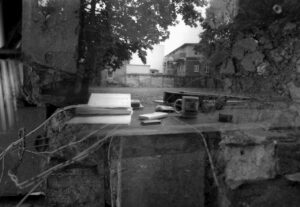
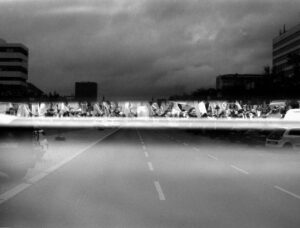
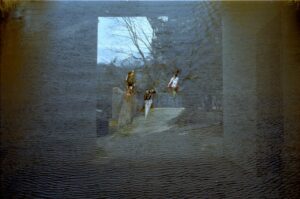
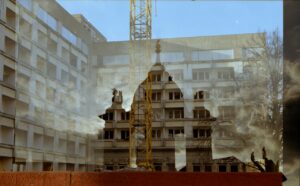
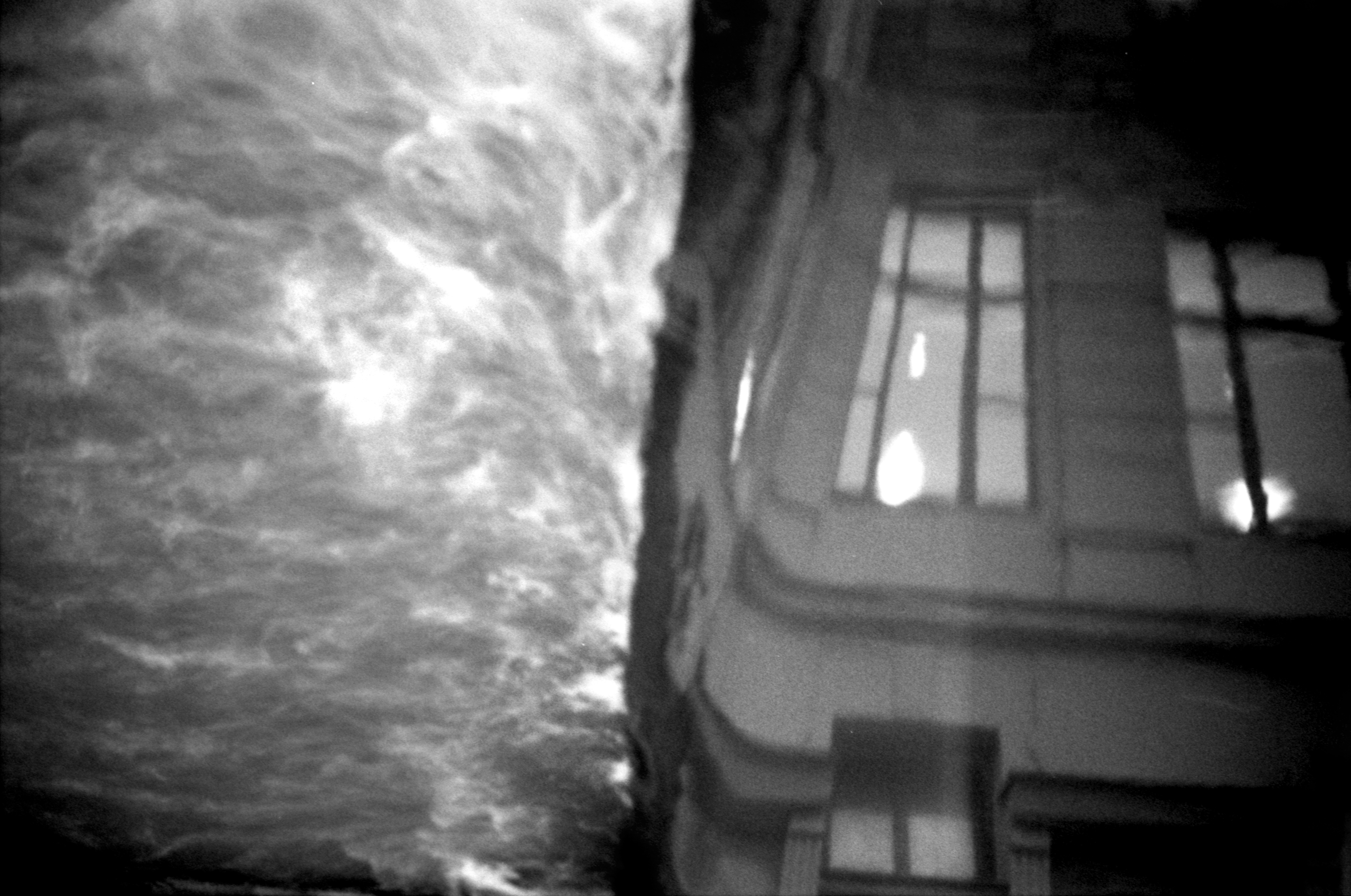
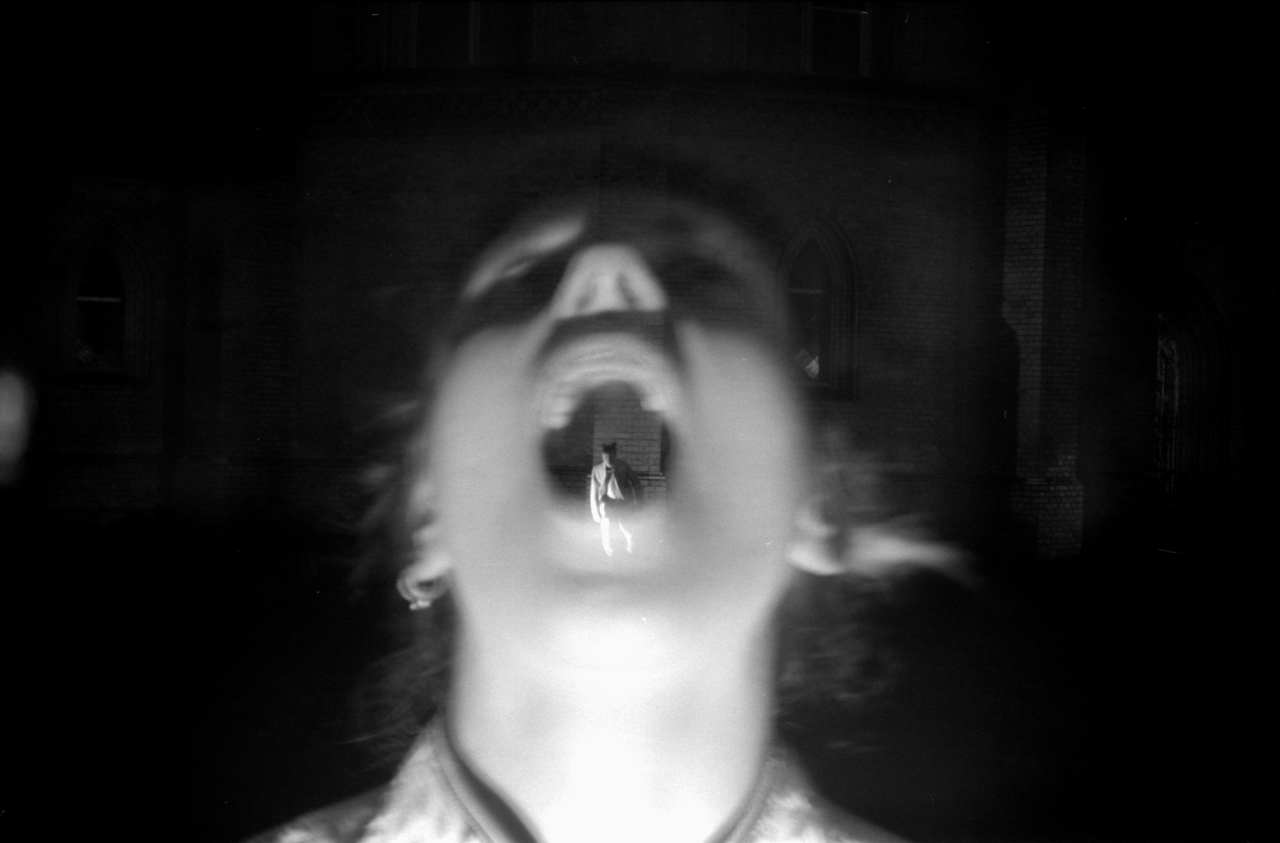
Photocracy is a card game based on (analog) photography as motifs.
It bears resemblance to the surrealism of a Dixit game, however, it follows a different set of rules and is based on photography as opposed to fine art paintings.
- Number of cards in use per game: 64 (photographic images with small film index written on them)
- Total number of cards in deck: unlimited
- Other playing devices: 49 ready-cut film strip slices in 7 different variations (7 each)
- single index card which lists film roll prices
- Number of players: 3-7
How to play
Investment
Every player has to invest a film roll of their choice to participate in the game.
Allocation & rotating storyteller
From the entire deck 64 cards are taken with which the game is to be played.
Per round there is a leading storyteller who hands every player a set of 7 cards (except themself) which are not to be revealed to the other players. The goal of the game is to get rid of all one’s cards and make them part of the unfolding visual narrative. For the first round, the first storyteller gets to choose as many film strip variations to play with during the entire game, choosing as many as there are players (without the storyteller).
Starting point of the plot
From the deck a single card is revealed and laid out openly by the storyteller.
The next chapter
Every player now has to think of a storyline as how the current card motif is to be continued based on their own hand and choose the most suitable card. The chosen cards are still not to be revealed but to be given to the storyteller individually. Once every player has chosen and handed over their card the storyteller shuffles these and aligns them face up next to the current card, one by one, without knowing to whom which card belongs. Next to every card, the storyteller places one of the distinct film strip variations to allocate a shape to them.
Selection
Every player takes a close look at all the available cards and is to make a decision about which card should be chosen as the next stepping stone in the storyline, albeit, nobody makes their decision heard or seen yet. The players have to secretly select the corresponding film strip, including the storyteller. Once all players have made their decision the storyteller counts down from 3 and when down at 0 all players reveal the film strip that corresponds to the card they chose.
Winner of the round
The card with the most votes wins the round and becomes part of the storyline. All players who have chosen the card to progress and the player whose card it was win the round and do not have to pick up a new card from the deck. All remaining players (not including the storyteller) have to pick up a new card. Any player can vote for their own card to become part of the storyline, yet, if their card does not win the round, they have to pick up an additional card to the one they must pick up anyway. Incase of a draw betwen cards the storyteller revaels their own choice to decide which card progresses and wins the round, including the ones who voted for it. Should this not lead to a clear winner either, every player picks up a new card and the round has to be repeated while the next player clockwise will become the next storyteller.
The next round
All players who voted for a card that did not win the round or whose card did not get chosen are to pick up a new card from the pile. All previous cards go to the bottom of the pile. Any player who voted for their own card but did not win the round has to pick up an additional card. The role of the storyteller and thus dealer is rotated clockwise and the entire process is repeated until a player has got rid of all their cards which makes them the winner and the storyline complete.
Winner
The winner gets to choose a film from the initially invested film rolls.
All remaining players have to check their cards and the written information on them to calculate the value of the images based on a table for films. All cards from the same film will euqate to the value of this film together, all different typtes of film are added in value and thus the table of expenses is complete. Lower expenses mean higher priority in the choice of film roll left available. The loser has to take whatever is left over.
Image Collection
In oder to print a total number of at least 100 cards to choose from per game these need to be collected and selected based on their compatibility and narrative potential int he first place.
Analog photographers who want to participate and contribute are asked to submit any number of images they consider worthy of featuring in the game by a certain deadline. Once all images are submitted and the deadline is reached, they all come togther and vote for images to be included. Images are then included based on their votes and the remainder is filled up in an interactive discussion to reach at least 100 cards.
Once all images are collected, single prints of identical size are to be made off of the negatives or combination of negatives to become the original raw deck of card templates. These are then scanned and batch printed digitally on glossy card board with embellished backs — just like a regular card deck.
Aesthetic rules for the selection of images are entirely in line with the purpose of a Dixit game.